
Baker County Sex Offender Checks
The Georgia Bureau of Investigation maintains the Georgia Violent Sexual Offender Registry under O.C.G.A. §42-1-12. It is the primary public source for a Baker County search. The Baker County Sheriff's Office handles local registration, verification, and enforcement. NSOPW adds a national layer when an interstate move may matter.
Search by name and geography, then match several identifiers. A name alone can point to the wrong person. Read the profile's status and update information with its offense jurisdiction and address type. Registry data is a regulatory public-safety record, not a list of everyone ever accused of a sexual offense.
Separate registry status from custody and court status. A registrant may not appear in a current jail search. A profile can cite a conviction from another county, state, or federal court. Follow the jurisdiction named in the official profile for case detail.
Georgia Sex Offender Registry Searches
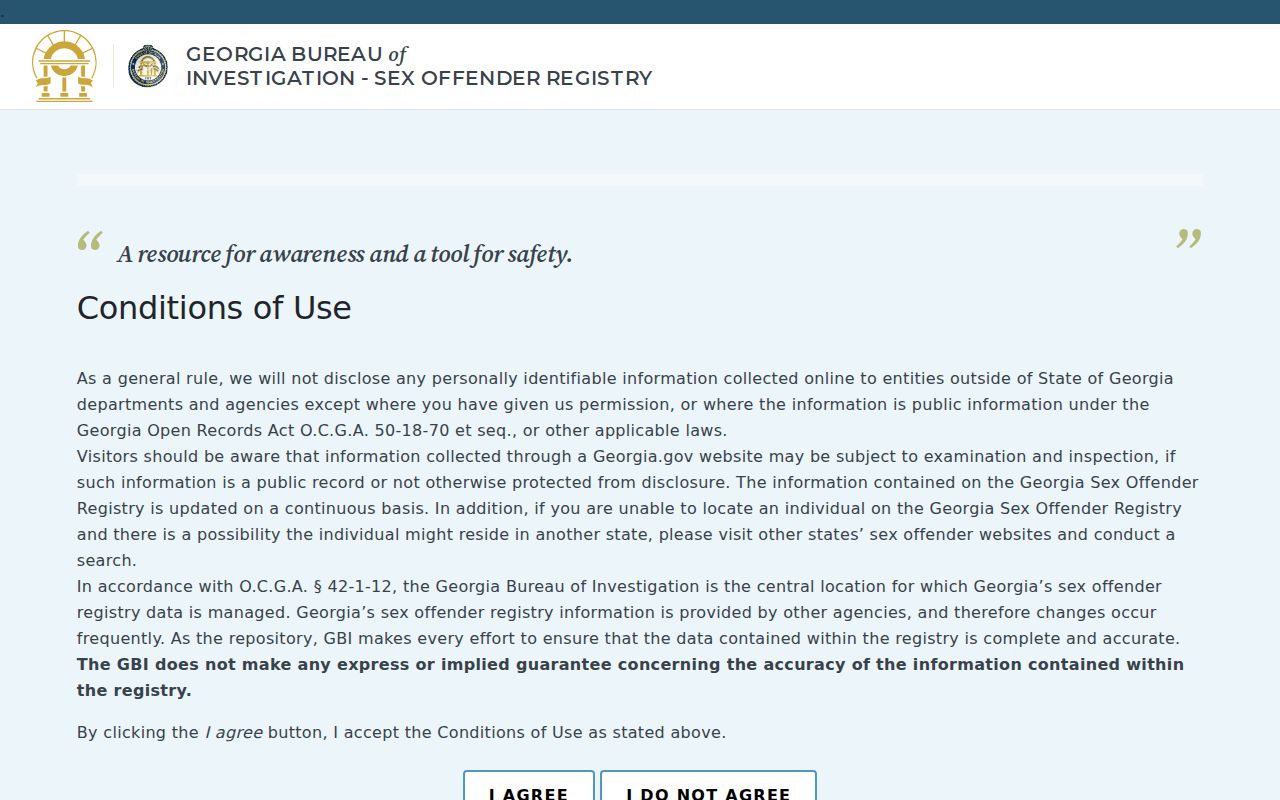
Begin at the official GBI registry entry point, review its conditions, and use the current controls shown there.
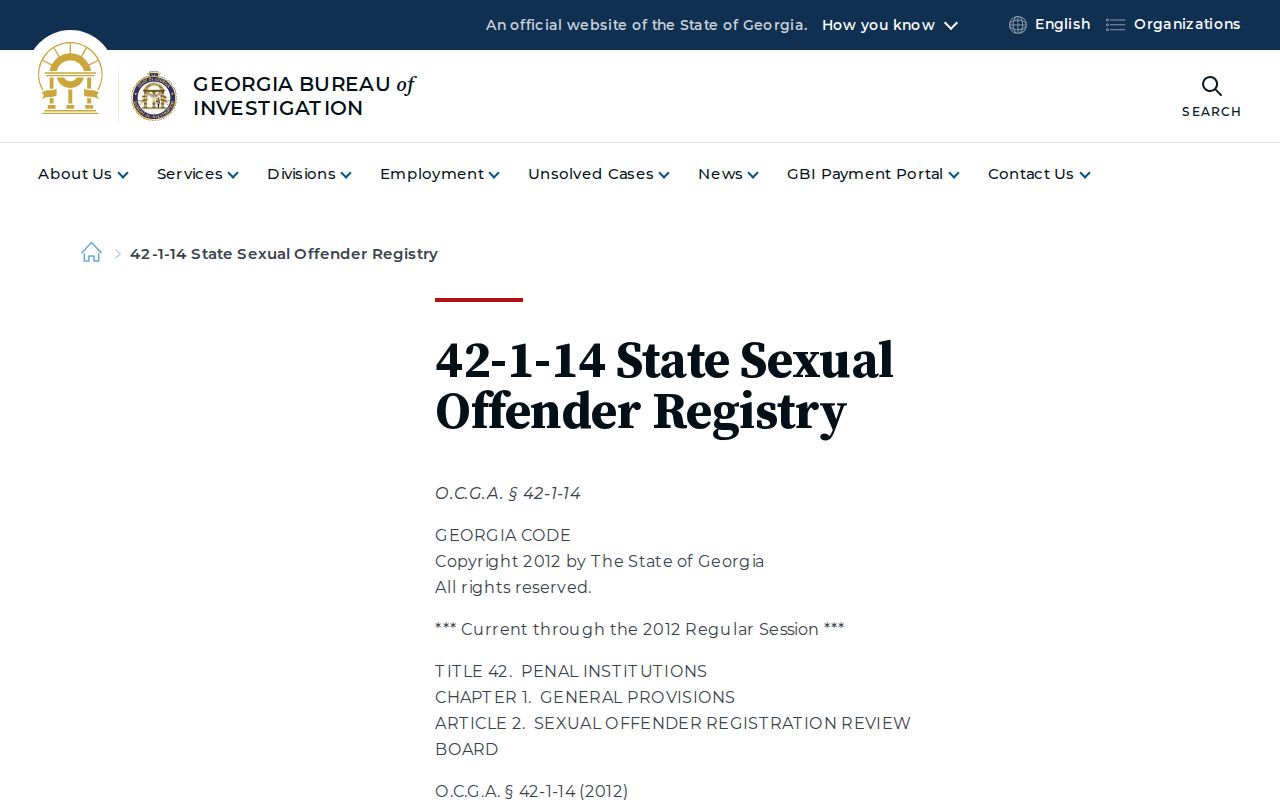
The state page keeps Baker County registry searches tied to the official source rather than a copied commercial list.
- Open the GBI registry from the official state page and accept the displayed conditions.
- Search the exact name, then repeat with County set to Baker or a valid address and radius mode.
- Open a result only after comparing the photo, aliases, and physical details.
- Read the offense jurisdiction, address type, status, and last verification or update together.
- Use NSOPW when a move across state lines is relevant.
- Report an apparent mismatch or noncompliance to the sheriff at 229-734-3003.
| Field | Type | Mode | Use |
|---|---|---|---|
| Last Name | Text | Name | Registrant surname |
| First Name | Text | Optional name | Narrow a match |
| County | Dropdown | Geography | Select Baker |
| City or ZIP | Text or dropdown | Optional geography | Narrow location |
| Address and radius | Text and dropdown | Address | Proximity mode if offered |
| Map or list | View control | Display | Changes presentation, not coverage |
Baker Name and Address Searches
Name and address searches answer different questions. A name search can help identify a known person across Georgia. A Baker County filter surveys profiles assigned to the county. An address-radius search, when the live interface offers it, shows records near a point but does not prove that the address is inside a city or violates a legal distance rule.
Spelling, aliases, moves, and reporting cycles can affect results. Repeat a search with a documented alias or geographic mode when the first attempt fails. Never treat one matching name as identity proof. Compare the official photograph, physical description, birth information as displayed, offense jurisdiction, and update dates.
Registry Profiles: What They Show
A Georgia registry profile combines identity, location, offense, and compliance fields. Exact display varies with the classification and available source data. Missing fields are not proof that the underlying fact does not exist.
| Name and aliases | Official display name and reported alternate names |
|---|---|
| Photo and description | Photograph, sex, race, height, weight, hair, eyes, and identifying marks where displayed |
| Address | Registered address, address type, county, and related location data |
| Offense | Description, statute, conviction date, and jurisdiction |
| Classification | Applicable Georgia classification, which may include sexually dangerous predator |
| Status | Compliance, registration, supervising agency, and last verification or update |
Read the fields as a group. A date may describe verification rather than a move, and an address type can change how the location should be understood.
The offense label also has limits. It reports a legal conviction and jurisdiction, not every fact in the court file. Do not infer unlisted conduct, risk, or current restrictions from silence in one profile field.
Read Baker Profiles Carefully
The GBI registry FAQ explains operation, relief, and common search limits.
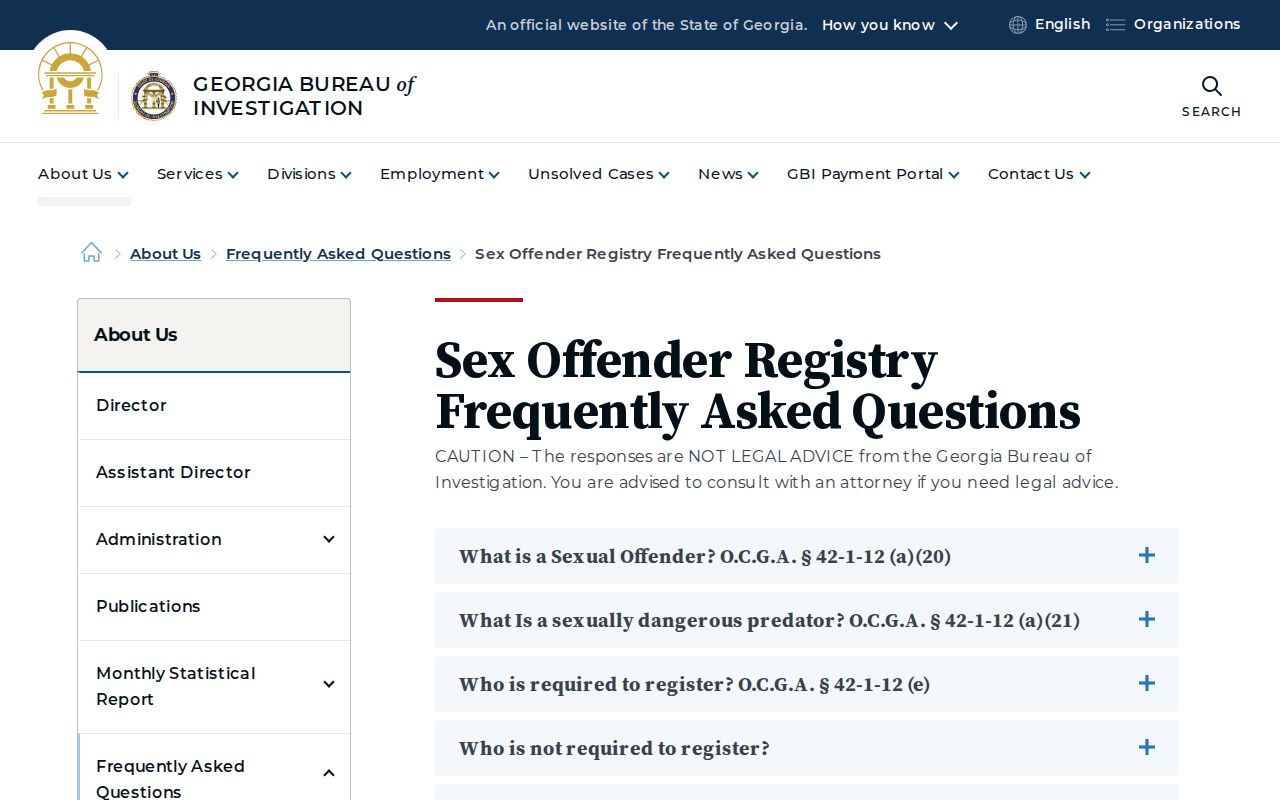
The guidance supports a careful reading: last verified, last updated, and current compliance are related labels, but they do not necessarily mean the same thing. Moves, court changes, and source reporting may create lag. If a Baker County profile looks stale, save the official profile details and report the concern to the sheriff. Do not confront the person or household.
Registration Levels and Duties in Georgia
Georgia must not be forced into a simple federal Tier I, II, and III chart. State law distinguishes people required to register and includes classifications such as sexually dangerous predator. Duration and duties can depend on the offense, conviction date, jurisdiction, older law, risk review, and court orders.
| Georgia category or path | Duration | Verification and visibility |
|---|---|---|
| Person required to register | May be lifetime; depends on governing law | Follow §42-1-12 and local sheriff requirements |
| Sexually dangerous predator | Classification-specific duties apply | Risk-level and verification rules require current legal review |
| Eligible §42-1-19 petitioner | Relief is not automatic | Superior Court decides after statutory conditions are assessed |
Readers resolving their own duties should use the court order, conviction date, and current statutes. A generic national tier label can misstate Georgia law.
O.C.G.A. §42-1-19 provides a Superior Court petition path for some eligible people. Relief is not automatic. Older offenses, out-of-state convictions, dangerous-predator findings, disability, and offense-free periods may affect review. The court decides, not a search screen.
Baker Registry and NSOPW
The GBI registry is the main source for Georgia status and Baker County geography. The National Sex Offender Public Website searches participating jurisdictions and helps when someone may have moved across a state line.
NSOPW is a supplement, not a replacement for the Georgia profile or Baker sheriff verification. Jurisdictions can update on different schedules, so compare the source profile and report inconsistencies through official channels.
Baker Map Radius Limits
Georgia imposes residence and activity restrictions through laws including O.C.G.A. §42-1-15, but the rules can turn on conviction date and legal status. A map circle is not a legal opinion about whether an address complies. Schools, child-care facilities, churches, and areas where minors congregate have statutory definitions that cannot be measured from a public map alone.
A person assessing their own registration duties should compare the governing judgment, current law, and official address information, then seek case-specific legal advice. Neighbors can use the map for awareness and planning, but should not declare a violation from distance graphics.
The Baker County Sheriff handles local registration and verification. A person resolving their own duty should call 229-734-3003 for current procedure. No separate public local list or verified alert app was established, so the state registry remains the documented online channel.
Baker's Local Registry Warning
The Baker County Sheriff's registry gateway expressly warns that its local list is incomplete and that address data can be wrong because of reporting or public-record errors. That direct warning makes a statewide cross-check essential. A person absent from the local display may still appear through GBI, while a rural delivery address may not respond to a Newton-only city filter.
Search Baker County first, then repeat with the person's name, ZIP code, or address when supported. If a profile appears wrong, report the issue to the sheriff at 229-734-3003. The agency can compare local registration material with the statewide submission. Do not publish private details or attempt to verify an address by visiting it.
Using Registry Information Lawfully
Registry information supports personal, family, and community safety. Use it to confirm an official profile, plan awareness, and give a factual concern to the Baker County Sheriff's Office. An emergency goes to 911. Suspected noncompliance that is not an emergency goes to the sheriff at 229-734-3003.
Do not contact, threaten, follow, expose, or pressure a registrant or household. Do not turn a proximity result into a claim of unlawful residence. The profile states what the government currently publishes; it is not a prediction of conduct or a license for private enforcement.
If a profile seems wrong, note its official URL, address type, status, and update date. Give those facts to the sheriff without posting them or investigating at the home. The agency can compare registration and move records.
Use registry data lawfully: Harassment, threats, vigilantism, discrimination outside lawful bounds, or using Georgia registry information to commit a crime can bring civil or criminal consequences.
Report Baker Registry Concerns
An apparent mismatch can come from a move, a verification cycle, a court change, or delayed source reporting. Capture only what the official profile displays: the name, profile identifier or URL, address type, county, status, and last update. Then call the Baker County Sheriff's Office at 229-734-3003. Use 911 only when there is an immediate emergency.
Do not visit the listed address or ask neighbors to investigate. The sheriff can compare the public entry with local registration records and determine whether follow-up is needed. If the issue concerns an underlying conviction rather than current registration, use the court named in the profile. If it concerns a profile in another state, follow that jurisdiction's official registry contact or NSOPW source link.
Public information may change after a search. Save the date of the official check and repeat it when current status matters for a safety plan. A screenshot can document what was displayed at that time, but it does not freeze the legal status or replace confirmation from the agency responsible for the record.